September 16, 2025
MAS Bond Debt Structures Explained
Financing Plan for Proposed Projects
The District plans to finance the proposed facility improvements through the issuance of general obligation bonds, pending voter approval. This method offers strategic advantages in structuring and managing debt while minimizing the impact on taxpayers.
Flexible Structuring
Unlike a traditional home mortgage, general obligation school building bonds offer flexibility in how debt is structured. This is especially important given the District’s current debt profile, which includes higher payments in the short term and expiring obligations in future years.
Recommended Strategy: Wraparound Structure
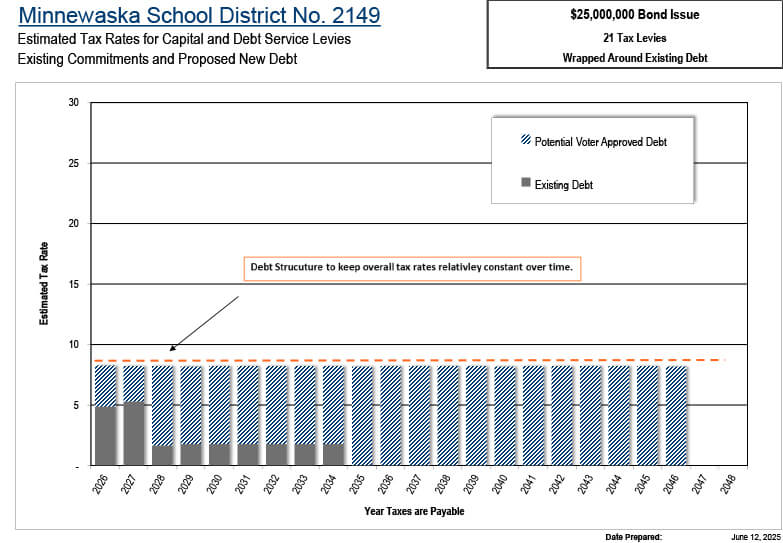
The District’s financial advisor, Ehlers, recommends a wraparound debt structure, combined with issuing the bonds in multiple phases. This is a commonly used approach for school districts with existing debt obligations because it allows for more strategic alignment of payments.
• This structure allows new bond payments to “wrap around” existing debt, taking advantage of scheduled declines in current debt service.
• The result is a more equitable and level tax impact over time for property owners.
Coordinated Payment Schedule
Payments on the proposed new bonds would be structured to coincide with the retirement of the District’s existing bonds. The preliminary structure includes:
• Smaller payments through taxes payable in 2027
• Larger principal payments after the current bonds are paid off
• Overall goal: Keep total tax rates stable over time
Offsetting Payment Increases
Although payments on the new bonds will increase as construction is completed, those increases will be offset by reductions in existing debt payments—helping to avoid spikes in the tax rate.
Why School Districts Use This Approach
Many school districts use similar financing strategies to:
1. Minimize tax impacts on property owners
2. Ensure tax rate consistency year over year
3. Provide upfront funding to:
• Take advantage of economies of scale
• Avoid cost escalation from construction inflation
• Prevent higher long-term costs from deferred maintenance
4. Distribute costs equitably over the useful life of the improvements, aligning with the residents who benefit from the upgraded facilities